SaaS is dead (almost): you don't need another subscription
Build vs buy: with AI, building on a platform you already own is more cost-effective than another SaaS. When to build, and when to keep buying.

- published
- updated
- read
- 6 min
On this page
TL;DR
Not entirely: SaaS isn't disappearing, but adding one subscription per business process no longer makes sense, because AI has made building software much cheaper. It's better to pick a platform — in my case the Microsoft ecosystem, with Azure and Power Platform — and build on top of it, reusing data, identity and governance, bearing in mind that the platform has its own licences and maintenance too. Buying SaaS is still the sensible choice for the regulated transactional core, standard processes, anything nobody can maintain, and tools whose value is their network.
Every year companies add another subscription to handle another process: HR, expenses, CRM, surveys, projects. My thesis is simple: with AI, building on a platform you already have fits better and is more cost-effective than buying yet another SaaS.
I’ll say it with my conflicts of interest declared up front: I run a Microsoft partner, my business is helping companies build on this platform, and GitHub Copilot, which I mention below, is also a Microsoft product. But I’m also a developer at heart, and I’ve worked with Microsoft’s low-code since it was little more than an experiment. What I’ve seen in the last year has changed my mind faster than I expected.
Why the SaaS model is running out of steam
SaaS solved a real problem: ready-to-use software, with no servers and no two-year projects. But the price turned out to be another problem, one we’ve been slow to see.
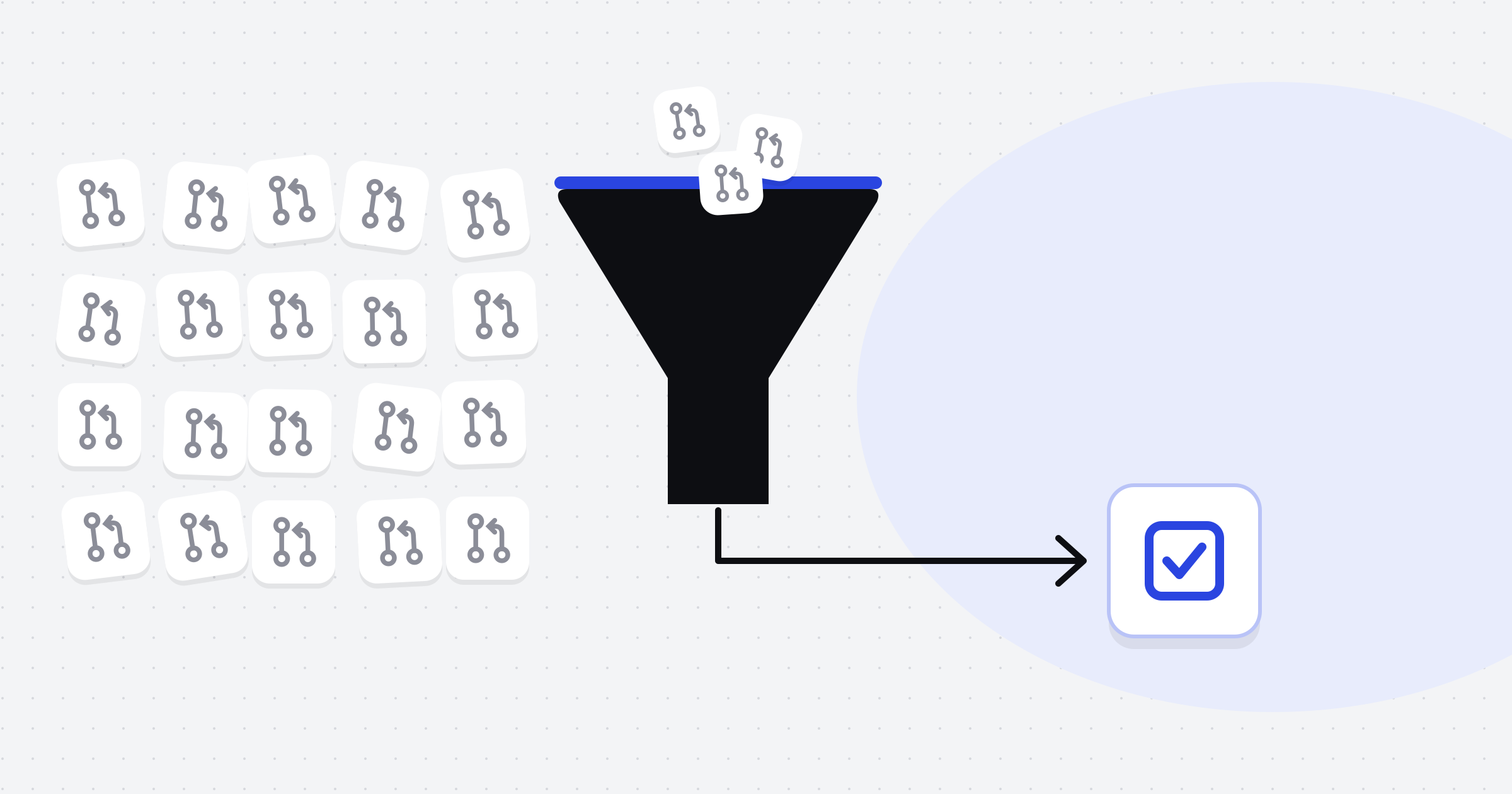
- Siloed data. Each tool holds its own slice of the truth: employees in one, customers in another, projects in a third. Integrating them becomes a permanent project.
- You pay per user for what you don’t use. Per-seat licences for features designed for the average customer, not for you.
- Your process bends to the tool. When the SaaS doesn’t do what you need, you change how you work or wait for the vendor’s roadmap.
- More surface to govern. Every vendor is one more place holding your company’s data, one more contract and one more set of access rights to review.
None of this is new. What’s new is that the alternative is no longer an eighteen-month custom build.
What AI changes
AI has made building software much cheaper, especially for well-scoped business applications. In my experience, what used to take a team and six months, a small team with good judgement now ships in weeks. It’s not an average: it’s what I see in our projects.
I sensed it the first time I used GitHub Copilot, and the gap has only kept growing since. And after using Claude Code and GitHub Copilot more and more effectively, I no longer have any doubt about the direction.
Other CEOs tell me bluntly: “I can build this in-house myself now.” And a project that takes longer than six months is a non-starter for them. They’re right: if building costs far less, the question stops being “which tool do I buy?” and becomes “where do I build it?”.
There’s a second effect. What I see is that AI agents are only useful with connected data and clear permissions. Ten isolated SaaS products are a poor starting point for an agent if nobody has integrated them.
Platform versus product
The alternative isn’t to code everything from scratch. It’s to pick a platform and build your processes on top of it. For me that platform is the Microsoft ecosystem, and it’s more than one tool.
In many companies it’s already half built: identity (Entra ID), collaboration (Teams, SharePoint, Outlook) and security are paid for and, for the most part, governed. What isn’t paid for is the layer for building on top (Power Apps Premium, Dataverse capacity, Copilot Studio’s Copilot Credits), which is licensed separately; Power Apps Premium, for example, rises from 20 to 22 USD per user per month on 1 January 2027 for new purchases and renewals[1]. It’s worth doing those sums before comparing with SaaS. On that foundation there are two paths, and AI has accelerated both.
Azure, for what needs engineering. Deploying and managing infrastructure on Azure is getting easier and easier with agents like Claude Code or GitHub Copilot, which now has an Azure version with agent mode in general availability[2]. In my experience, what used to need a specialist per service, a small team can now describe, deploy and maintain.
Power Platform, so the business can build. It’s an enterprise-grade low-code tool with governance built in. What was missing was removing the learning curve. Now business people without a technical background are starting to be able to describe an agent, a flow, a site or a report in natural language and get a first version that works, without months of training. And for those who write code, Power Apps code apps (web apps built with React, Vue or other frameworks that run on Power Platform with its connectors and governance policies) have been generally available since February 2026[3].
The underlying difference is this: a SaaS is a product you rent; a platform is an asset you build. Each new piece reuses the data, identity and governance of the last one, instead of adding another silo.
And it’s AI that makes the model viable: building and maintaining a piece is, in many cases, cheaper than the subscription.
What it means for companies
If you run a company or its technology function, three things change:
- Before buying or renewing a SaaS, ask whether it can be built on the platform. Especially for processes that set you apart or that cross data from several departments.
- You need a governance model, not just developers. Environments, lifecycle, security and documentation; in Power Platform, that means turning on Managed Environments and data policies[4]. Without that, AI-powered low-code ends up as hundreds of orphaned apps: the same old shadow IT, only faster.
- A small team with AI can perform like a large one. In my experience, two or three developers with good judgement can sustain a portfolio of applications that used to need one vendor each. On one condition: more activity isn’t more delivery, and review becomes the bottleneck (I cover this in More code, not more software).
For partners like the one I run, this is a fundamental shift as well. Our value no longer lies in development hours. It moves to designing the platform with the customer, governing it and accelerating their team. Partners like us who don’t make that shift will become redundant, and rightly so.
When buying SaaS still makes sense
Not everything should be built. Buying is still the sensible choice in these cases:
- The system is the regulated transactional core. An ERP like SAP, Dynamics 365 Finance and Operations or Business Central, or statutory accounting, will stay in the hands of specialist vendors.
- The process is standard and doesn’t set you apart. If everyone does it the same way, an off-the-shelf product is usually enough.
- There’s nobody to maintain it. Building without an internal owner or a partner is manufacturing technical debt.
- The value is in the network, not the software. Tools that are worth it for the external ecosystem they connect you to.
- Building has a price too. The platform’s per-user licences and consumption costs, maintenance and reliance on a single vendor — the very things I criticise in SaaS — don’t go away. The platform changes where the cost comes from; it doesn’t remove it.
The right question isn’t “SaaS, yes or no”. It’s which part of your company is a commodity and which part deserves to be a platform.
Digitising with judgement
SaaS isn’t going to disappear tomorrow, and the headline exaggerates on purpose. But adding one subscription per process is on borrowed time in companies that take AI seriously.
What’s coming is digitising with judgement: one platform, one data model, one governance model and small teams building quickly on top. In upcoming posts I’ll share how I’m testing this in practice, including what works and what doesn’t.
If you’re thinking about this for your own company, I’d like to hear where you see the limits.
Key takeaways
- Before buying or renewing a SaaS, ask whether it can be built on the platform.
- You need a governance model, not just developers.
- A small team with AI can perform like a large one.
Frequently asked questions
Is SaaS dead?
Not entirely. The headline exaggerates on purpose, and SaaS isn't going to disappear tomorrow. What no longer makes sense is adding one subscription per process, because AI has made building software much cheaper, especially for well-scoped business applications. Buying SaaS is still the sensible choice for the regulated transactional core, standard processes, anything nobody can maintain, and tools whose value is their network.
Is it better to build on a platform or buy another SaaS?
In the author's experience, with AI, building on a platform you already have fits better and, in many cases, costs less than buying yet another SaaS, especially for processes that set you apart or that cross data from several departments. A SaaS is a product you rent; a platform is an asset you build, and each new piece reuses the data, identity and governance of the last one instead of adding another silo.
Is building on Microsoft 365 and Power Platform free?
No. Identity, collaboration and security are usually already paid for, but the layer for building on top (Power Apps Premium, Dataverse capacity, Copilot Studio's Copilot Credits) is licensed separately. Power Apps Premium rises from 20 to 22 USD per user per month on 1 January 2027 for new purchases and renewals. On top of that come maintenance and reliance on a single vendor. The platform changes where the cost comes from; it doesn't remove it.
When does buying SaaS still make sense?
When the system is the regulated transactional core (an ERP like SAP, Dynamics 365 Finance and Operations or Business Central, or statutory accounting), when the process is standard and doesn't set you apart, when there's nobody to maintain it (building without an internal owner or a partner is manufacturing technical debt), and when the value lies in the external network the tool connects you to.
What do you need to build without ending up with shadow IT?
A governance model, not just developers. Environments, lifecycle, security and documentation; in Power Platform, that means turning on Managed Environments and data policies. Without that, AI-powered low-code ends up as hundreds of orphaned apps, the same old shadow IT, only faster.
Sources
- New pricing for Power Apps Premium — Microsoft Licensing Resources, 2026-09-09. microsoft.com
- Announcing General Availability of GitHub Copilot for Azure—Now with Agent Mode — Microsoft DevBlogs, 2025-06-19. devblogs.microsoft.com
- Generally available: host and run code apps in Power Apps — Microsoft Power Platform Blog, 2026-02-05. microsoft.com
- Managed environments overview — Microsoft Learn, 2026-10-08. learn.microsoft.com